
At the end of the production line, everything comes together. Boxes are sealed, labeled, and ready to ship. But before they leave the facility, they still need to be stacked onto pallets.
For many manufacturers, palletizing is still done manually. Workers lift, turn, and stack boxes for hours at a time. While it may seem like a simple task, manual palletizing often becomes a bottleneck as production grows.
If your operation is starting to feel the strain, it may be time to consider automation.
Here are five signs that your palletizing process may be ready for a robotic upgrade.
1. Your team is working overtime to keep up
When production increases, palletizing is often the first place where pressure builds.
Upstream processes may be automated and optimized, but manual palletizing can struggle to keep pace with higher output. Workers may need to move faster, take on additional shifts, or work overtime just to prevent products from piling up.
This creates several challenges:
- Increased labor costs
- Worker fatigue
- Higher risk of mistakes or injuries
A robotic palletizing solution can operate consistently throughout the shift, helping maintain throughput without adding pressure on your workforce.
2. Palletizing jobs are hard to fill
Palletizing is physically demanding work. It often involves repetitive lifting, bending, and twisting throughout the day.
Because of this, many manufacturers struggle to recruit and retain workers for these roles. Even when positions are filled, turnover can be high.
When companies cannot reliably staff palletizing positions, production becomes vulnerable. A single absence or staffing gap can slow down the entire end-of-line process.
Automation helps stabilize operations by reducing dependence on hard-to-fill positions while allowing workers to move into less physically demanding roles.
3. Injuries and ergonomic concerns are increasing
Manual palletizing involves repetitive movements that can lead to strain and injury over time.
Common issues include:
- Back strain from lifting heavy boxes
- Shoulder injuries from repetitive stacking
- Fatigue-related accidents late in the shift
Beyond the human impact, injuries can also result in:
- Lost production time
- Workers’ compensation costs
- Increased safety concerns
Collaborative palletizing robots can take on the heavy lifting while operators supervise the system or manage higher-value tasks.
4. Your end-of-line process is becoming a bottleneck
Even if upstream processes run smoothly, palletizing can slow everything down.
When boxes accumulate faster than they can be stacked, operators may rush to keep up. This can lead to inconsistent pallet patterns, unstable loads, or workflow disruptions.
Automation brings consistency to the end of the line. A robotic palletizer can maintain a steady pace and build pallets according to predefined patterns, ensuring stable loads and predictable output.
5. You need to scale production but labor is limited
Many manufacturers want to increase production but face labor shortages.
Hiring additional palletizing staff is not always feasible. Even when workers are available, training and turnover can make scaling difficult.
Automation provides a way to increase capacity without expanding the workforce for repetitive tasks. A robotic palletizing system can support higher production volumes while keeping operations stable and efficient.
Getting started with palletizing automation
.jpg?width=576&height=384&name=09_2024_WE_CaseStory_Raumland%2012-2%20(2).jpg)
For manufacturers beginning their automation journey, palletizing is often one of the most practical starting points.
End-of-line automation typically offers:
- Clear return on investment
- Minimal disruption to upstream processes
- Immediate relief for physically demanding tasks
Collaborative palletizing solutions are designed to be accessible for manufacturers who may be new to robotics. With intuitive interfaces and flexible deployment, they can integrate into existing production environments without major changes.
A Practical First Step Toward Automation
Not every line has the same requirements. Payload, cycle time, SKU mix, and available space all matter.
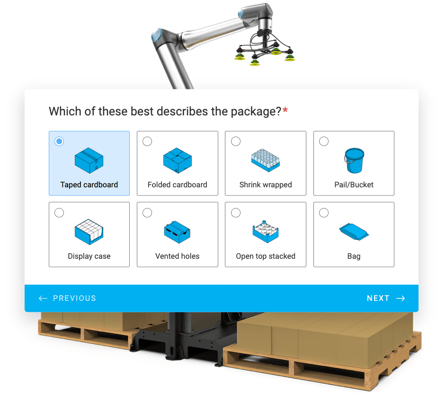
Use Robotiq’s Palletizing Fit Tool to quickly assess whether cobot palletizing makes sense for your operation and what a realistic deployment could look like for your facility.


.jpg)
The post “5 signs it’s time to automate your palletizing process” by Élisabeth Ste-Marie was published on 03/05/2026 by blog.robotiq.com