
In early July 2026, the Trump administration quietly tapped Matthew Wielicki to lead the U.S. Global Change Research Program. The move places a podcaster known for downplaying the threats of climate change – and importantly, someone who has not been meaningfully involved in research on climate change or its impacts – at the top of one of the country’s most important scientific enterprises, one mandated by federal law.
Under the law, the Global Change Research Program – USGCRP for short – is required to prepare and submit a National Climate Assessment to the president and Congress at least every four years. Its purpose is to help the country’s businesses, communities and governments at all levels make better decisions about how to respond to the growing risks posed by climate change.
The National Climate Assessments have done two things exceedingly well since the first report was released in 2000: They have told hard truths about the risks that climate change poses to the United States, and they have made clear that, if left unchecked, those risks are going to get much worse.
But despite the best intentions and science, the assessments have largely failed to fulfill a critical aspect of their mandate: They haven’t provided decision-makers with a clear accounting of the range of national and local options for adapting to or mitigating climate risks. They have also remained largely silent on which adaptation or mitigation strategies are most appropriate in different places and under different climate scenarios. And they have said next to nothing about how to make decisions in the face of the risks – and inevitable uncertainties – posed by climate change.
This is why I have argued that the National Climate Assessment, and other climate reports like it, are broken and in urgent need of repair. I come to this conclusion from my experience as an interdisciplinary climate and decision scientist, as a member of the team that reviewed the Fourth National Climate Assessment beginning in 2017 and as chair of a National Academies working group charged with figuring out how climate reports like the National Climate Assessment could better support decision-makers in business and government.
Fixing a broken National Climate Assessment is the job of the person in charge of the USGCRP. But the fix it needs isn’t pretending that climate change isn’t happening – the evidence is everywhere in extreme downpours, deadly heat waves and severe droughts. The real fix is to expand the focus of the National Climate Assessment from just reporting the causes and consequences of climate risks to providing better advice about how to manage them.
Why sharing solutions also matters
To be fair, scientists who develop assessments like this focus on the evidence; they tend to avoid recommending particular courses of action because doing so would require making explicit value judgments that extend beyond the scientific evidence. This is a level of restraint that many people have come to expect from the scientific community.
But as the risks posed by climate change have become more acute, this omission has limited the National Climate Assessment’s usefulness for leaders in business and government who might want – or need – to use it.
Imagine learning from your doctor that you have been diagnosed with a serious illness, only to be ushered out of the office before hearing about either your treatment options or what other patients have done – and how they have fared – under similar circumstances. That’s largely the story of the National Climate Assessment. It does a terrific job of enumerating risks, but a poor job of helping people decide how – and, in some cases, even if – they should manage them.
The National Climate Assessment under Trump
Appointing Wielicki, a former geochemistry instructor and climate science critic, to lead the USGCRP and oversee the National Climate Assessment won’t address the report’s shortcomings. In fact, I expect it will make them worse.
Given the administration’s history, it’s not a stretch to imagine a USGCRP under Wielicki’s leadership soft-pedaling climate risks or, worse, amplifying the debunked “climate change is a hoax” narrative advanced by the Trump White House. Why? Because it’s already happening.
The administration dismantled the USGCRP in 2025. Then it commissioned a group of climate skeptics to write their own government report dismissing the risks of climate change, part of an effort to buttress the administration’s moves to rescind a decades-old federal finding that climate change endangers public health and welfare. A court later determined that the report was illegally produced.
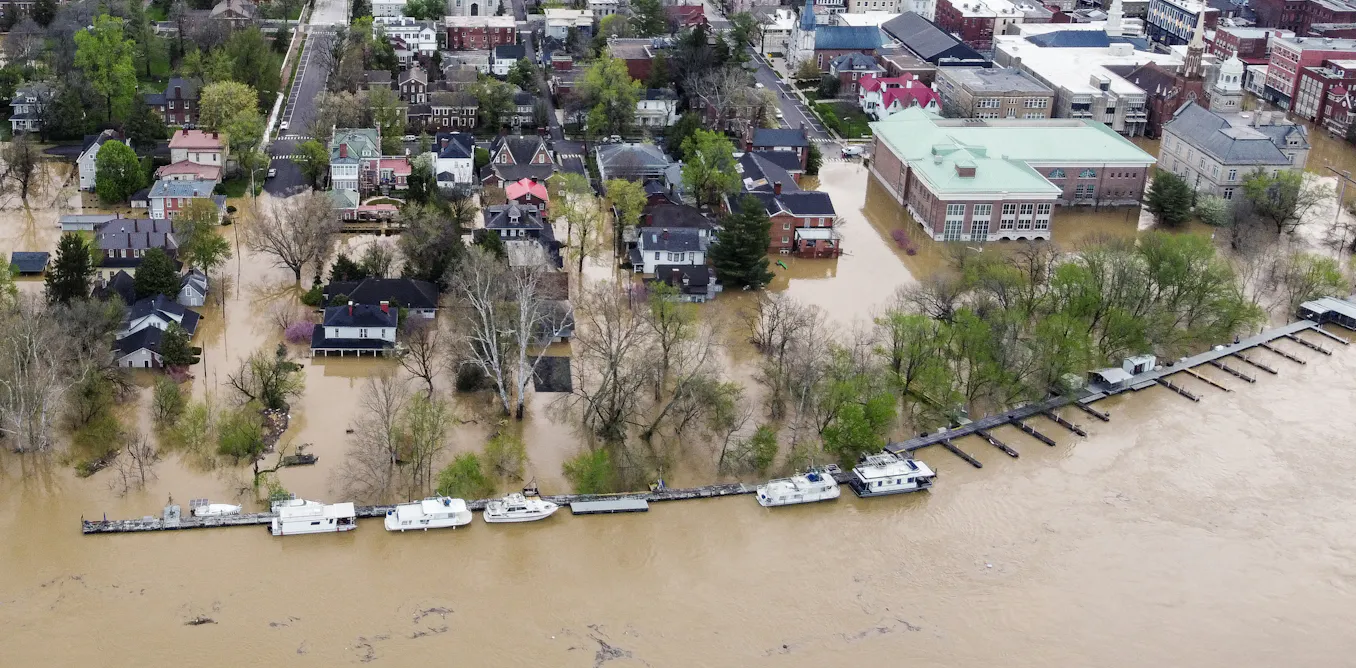
At the same time, the world’s 10 hottest years on record have all happened since 2015, and Americans across the country are experiencing climate change in worsening storms, riskier floods and fires, extreme heat and drought. Leaders are looking for ways to alleviate those risks. Indeed, the long-term success of their businesses demands that they do so.
What decision-makers in business and government across the country really need isn’t deflection or denial. They need information about the costs, benefits and uncertainties associated with different climate risk-management options that they can act on.
They also need a clearer picture of the trade-offs associated with acting now, delaying action or, in some cases, choosing to do nothing.
Over time, an improved National Climate Assessment would build a searchable library of practical and relatable case studies of climate risk-management decisions. They would describe, among thousands of examples, why and how New York City used scenario planning to prepare for sea-level rise and more intense storms; why Flagstaff, Arizona, turned to a ballot initiative to address flood and wildfire risks; how places from Burlington, Vermont, to Georgetown, Texas, fared after transitioning their electricity grids exclusively to renewables; and why governments in South Florida have continued to avoid policies that would limit development or pursue managed retreat from vulnerable areas despite swelling political and scientific consensus about the long-term risks.
Cases like these are what would form the backbone of a more effective National Climate Assessment.
Providing candid, useful examples to follow
One key to making these case studies useful is to be candid about the strengths and weaknesses of competing options for managing risk, including maintaining the status quo.
Another is to provide guidance on how the lessons from each case can be adapted to different places and different kinds of risks.
An important third key is to keep these cases updated over time so users of the National Climate Assessment can learn from the outcomes of others’ decisions.
All three are well within the grasp of the USGCRP if it is operating under knowledgeable and experienced leadership.
And this brings us back to the analogy of the doctor and the patient. Some patients will opt for treatment, while others will choose to ignore their diagnosis. It’s the same story for how organizations and governments respond, or not, to climate change.
Only by developing a better understanding of how and why specific decisions to act on climate were made, and then what happened next, can those charged with managing future climate risks be better prepared to confront decisions about climate action when it’s their turn to make them.
The post “The National Climate Assessment is broken – appointing Matthew Wielicki to lead it won’t help” by Joe Árvai, Professor of Psychology, Biological Sciences and Environmental Studies, USC Dornsife College of Letters, Arts and Sciences was published on 07/22/2026 by theconversation.com