
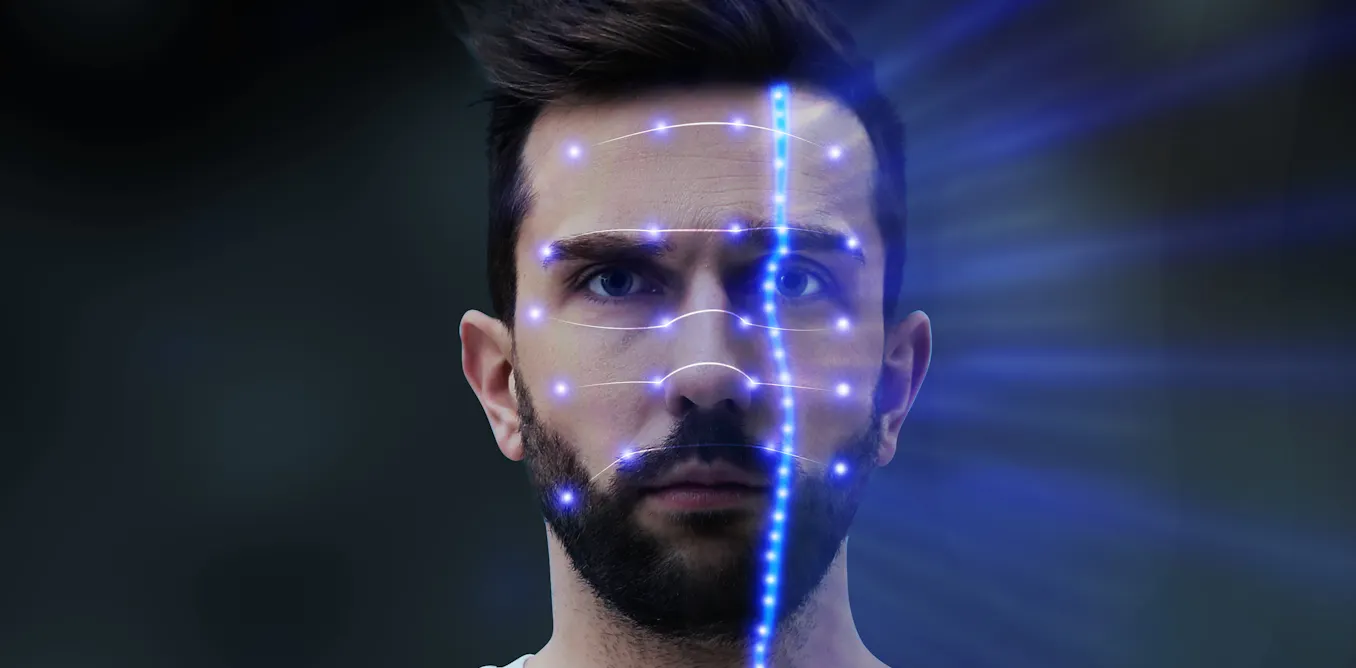
A teenager joins an online video chat. Within seconds, artificial intelligence analyses their face and gives them a score out of ten for “attractiveness”. They are compared in real time with another user who scores higher and is declared the winner. The game is live-streamed, and the audience ridicule the loser in the chat.
This is one example from a growing number of websites and apps that rate people’s faces – sometimes comparing users, identifying supposed flaws or recommending ways to improve their score.
AI appearance-rating platforms present attractiveness as though it can be measured with scientific precision. But beauty cannot be captured by a mathematical calculation or a fixed set of programmed rules. What people find attractive varies between cultures and individuals.
AI systems also reflect the assumptions and biases in their training data and design. A critical comment from another person can often be recognised as an opinion. A precise score from a computer may carry an illusion of authority or objective fact.
AI appearance-rating tools form part of a wider online culture in which appearance is treated as something to measure, rank and optimise. This is particularly visible within the “looksmaxxing” subculture, where users share advice intended to make them more “conventionally attractive”.
Some of this advice concerns personal grooming, clothing or exercise. Other content promotes cosmetic procedures, extreme dieting or dangerous practices. The language of optimisation can encourage users to see their face or body as a problem requiring constant correction.
A 2026 study explored the vulnerability of young people to body image disorders, as appearance-focused content saturates their online feeds. For young men in particular, this can take the form of muscle dysmorphia, a condition characterised by the persistent belief that the body is not muscular enough.
Looksmaxxing is part of a wider online environment that can expose young people to narrow appearance ideals. AI ratings add a number, which may turn an insecurity into something that feels like an objective verdict.
My research examines how social media algorithms expose users to narrow societal body ideals, and how appearance-focused content on platforms such as TikTok may affect how users see and feel about their bodies. AI appearance ratings go a step further by scoring the individual user against these ideals. This could lead to restricted eating, over-exercising or other appearance-changing methods.
Potential harms
As I describe in my research, appearance evaluation, objectification and social pressure can contribute to body dissatisfaction and disordered eating. Online environments that amplify these pressures may make existing difficulties worse.
Researchers do not yet know the impact of receiving these scores on users’ behaviour. Eating disorders are complex conditions, and no single platform explains why somebody develops one. However, turning appearance into a competitive score may reinforce the idea that personal worth depends on measurable physical improvement.
My research during the COVID pandemic found that most participants with experience of eating disorders reported their symptoms had worsened during the UK lockdown. Participants described several pressures including disrupted routines and support, social isolation, and greater exposure to triggering messages online.
Although preceding the emergence of AI ratings, that study showed how appearance-focused online content can affect people who are already vulnerable. Eating disorders are also associated with a substantially increased risk of premature death, which is one reason potential new sources of appearance pressure deserve careful study.
A 2026 review of looksmaxxing research, which drew on a small body of academic research and grey literature – material published outside conventional academic journals, such as reports, theses and conference papers – identified concerns about body dissatisfaction, constant comparison and features associated with body dysmorphia and disordered eating. Some looksmaxxing communities discuss extreme dieting, steroid use and cosmetic interventions.
The review described “bone smashing”, in which people repeatedly strike their faces with hard objects in the belief that injury will produce a sharper jaw. There is no evidence that this improves appearance. The review also stressed that high-quality research on looksmaxxing remains scarce.
AI-rating tools could also be incorporated into coercive relationships. Body shaming is a recognised feature of coercive control. Abusers criticise their partners’ appearance, control what they eat or wear, and undermine their sense of worth.
Prosecutors in England and Wales recognise that changes in appearance, including weight loss, can indicate controlling or coercive behaviour. Research has also identified links between intimate partner violence and eating disorders.
Research shows that abusive partners use a range of technologies to monitor, harass and control victims. An abuser could use a low AI-generated attractiveness score to demean a partner. For someone whose confidence has already been worn down, the apparent agreement of a machine may make the criticism harder to challenge.
There is no direct academic evidence yet that AI appearance ratings are being used in this way. But research on technology-facilitated intimate partner violence suggests this possibility deserves attention. It is also something that frontline professionals working with domestic abuse should be alert to.
These risks are not limited to adults. Some AI-rating platforms which say they are intended for adults do not use robust age checks.
In the UK, social media, search and other online services covered by the Online Safety Act that are likely to be accessed by children must assess and reduce risks to them, including risks from content that encourages disordered eating, bullying and dangerous activities.
Regulators have not specifically classified AI appearance scoring as harmful content. However, competitive appearance rankings, contact with strangers and public commentary are potential risks that platforms should consider when assessing how their services may affect children.
An algorithm can turn subjective opinions into a convincing-looking number. But it cannot discover somebody’s objective level of attractiveness, because no such measurement exists.
Researchers and regulators now need to examine how users interpret these scores, and whether competitive rating systems expose users to avoidable harm.
The post “the troubling rise of AI appearance ratings” by Dawn Branley-Bell, Chartered Psychologist & Associate Professor of Digital Health & Wellbeing, Northumbria University, Newcastle was published on 08/10/2026 by theconversation.com