
Each time another study about human-driven species extinction hits the news in Aotearoa New Zealand, a familiar pattern unfolds in online comment sections.
As researchers in this field, we have seen how quickly new findings about biodiversity loss are overshadowed by a debate over who is responsible.
We have repeatedly encountered blunt statements such as “why should Māori have a say?” linked to arguments that Māori caused species declines.
Given the long dominance of European colonial perspectives in natural history and archaeology, it is perhaps unsurprising that such claims provoke strong responses.
Some Māori counter with statements such as “we didn’t cause moa extinction, we were the first conservationists”.
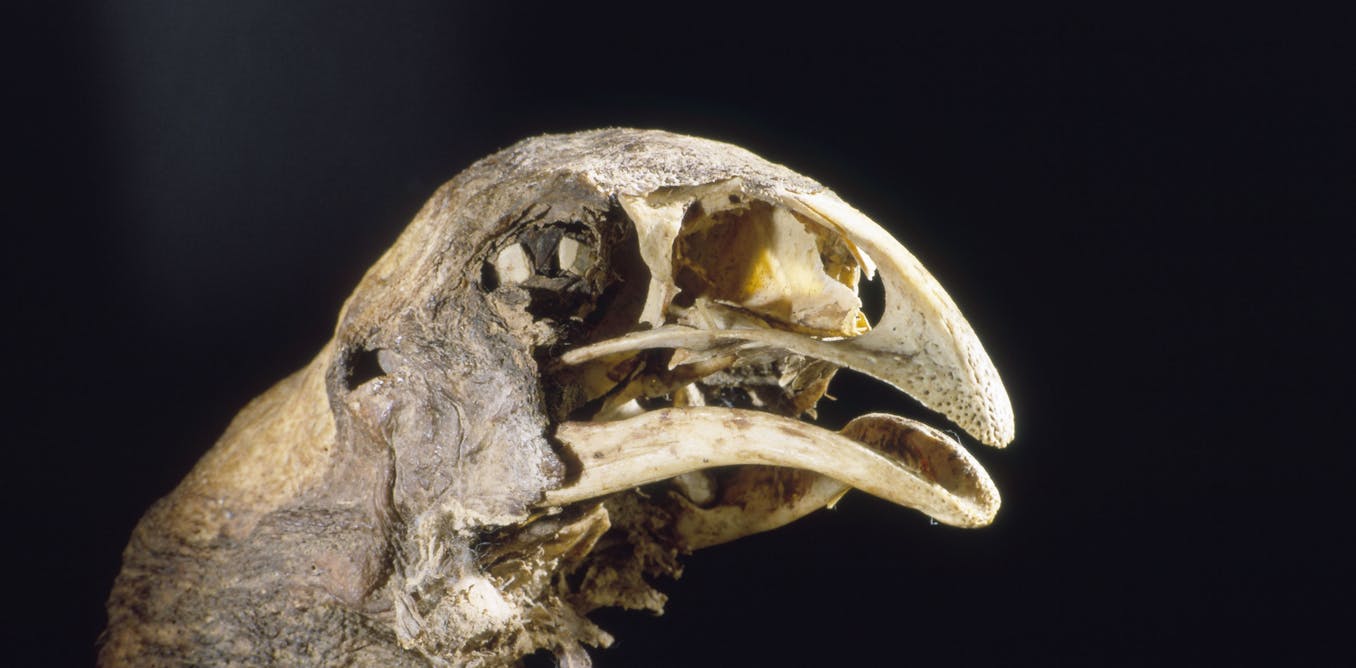
We have seen arguments that treasured species such as kuri (Polynesian dogs) would not have been allowed to go feral, and that the extinction of the Waitaha penguin was due to competition for nesting sites with hoiho yellow-eyed penguin, despite evidence to the contrary.
Such responses reflect frustration with research – and at times media coverage – framed in ways that appear to assign blame without sufficient context.
One news article on the translocation of takahē onto Ngāi Tahu land, for example, linked the species’ “decline” to land confiscations, despite evidence of a more complex history.
This isn’t a phenomenon unique to New Zealand. The causes of ecosystem modificationn on Rapanui (Easter Island) and megafauna extinction in Australia have been hotly debated. In Australia, responsibility has been variously attributed to human activity, climate change, or some combination of the two.
Ultimately, this blame game does little to advance understanding.
In Aotearoa, moving beyond it is essential if mātauranga (Māori knowledge systems) is to inform evidence-based kaitiakitanga (guardianship and stewardship) and the conservation of taonga (treasured) species.
Placing extinction in context
Throughout history, human expansion has often been followed by waves of extinction.
This is especially apparent in the Pacific, where island species – often slow-breeding and long-lived – have been especially vulnerable. Hunting for food, habitat clearance and the introduction of predators such as rats and dogs tipped ecosystems out of balance.
Eventually, a new balance was reached with humans as part of the ecosystem and the development of or modification of existing tikanga (customs).
Polynesians brought to Aotearoa kiore (Pacific rat), kuri and a suite of plants such as taro and kumara. With few available protein sources – there were no chickens or pigs – these earliest settlers relied heavily on hunting, particularly in southern Aotearoa where Polynesian horticulture was not viable.
Many species could not withstand even low levels of hunting, especially when combined with predation from introduced animals. People needed to eat, plain and simple.
Modelling suggests that for moa hunting to have been sustainable, more than half of the South Island would have needed to remain a “no-take” zone – and there is little reason to think the moa’s fate would have differed had Europeans arrived first.
Why language and inclusion matter
Effective science communication places findings in context and avoids language that overreaches the evidence or assigns unsupported blame.
A case in point was a recent study that described soot from human-induced forest fires in ice core samples retrieved in Antarctica and linked it to “Māori arrival in New Zealand”.
Some Māori saw the framing as suggesting responsibility for pollution in a region often perceived as pristine. There was considerable push back by New Zealand scientists, including Māori palaeoecologist Rewi Newnham, who showed the soot could have come from fires in Australia or South America around the same time.
It highlighted the problem of talking “about Māori without Māori” – and the importance of including Indigenous perspectives to ensure balanced interpretation of results.
We have seen similar tensions arise in discussions about rats. Pest eradication initiatives often treat all three rat species in Aotearoa as interchangeable, overlooking the distinct history of kiore.
While kiore undoubtedly contributed to ecological change, they were also a valued food source, seasonal indicator and taonga carried across the Pacific with intention and care.
Grouping kiore with Norway and ship rats oversimplifies that history and risks reinforcing the same binary thinking that underpins the extinction blame debate.
When nuance is stripped from species histories, our understanding of Māori relationships with animals are flattened. And opportunities are lost to learn from complex traditions of coexistence and management that could inform conservation today.
Moving forward with mātauranga
Society would do well to heed the whakataukī (traditional proverb) kia whakatōmuri te haere whakamua – to “walk backwards into the future with our eyes fixed on the past”.
Lessons from both Māori and Pākehā histories can help inform evidence-based kaitiakitanga, conservation management and sustainable mahinga kai (customary food gathering).
The knowledge gained from palaeontological and archaeological research should be viewed as an opportunity to give back knowledge to Māori lost due to colonialism, such as how Polynesians adapted to Aotearoa’s dynamic environment and evolved into Māori.
Within many Māori narratives of the natural world lie detailed ecological insights, shaped by generations of close relationship and observation.
These stories reflect deep understandings of population dynamics, seasonality and balance – knowledge grounded in lived experience and careful attention to place.
Reengaging with these ways of knowing alongside contemporary science offers more than historical understanding. It opens pathways toward more adaptive, relational and enduring forms of conservation in a rapidly changing world, such as is being done in the East Otago Taiapuri and between Manaaki Whenua Landcare Research and the Tūhoe Tuawhenua Trust.
Throwing blame about human impacts in the past is unproductive.
It is knowledge such as mātauranga, developed over centuries in Aotearoa and over millennia in other Indigenous cultures, alongside established conservation tools, that is needed to tackle Aotearoa’s ongoing biodiversity crisis.
The post “To help save NZ’s native species, we must move past the extinction blame game” by Nic Rawlence, Associate Professor in Ancient DNA, University of Otago was published on 03/10/2026 by theconversation.com